
Results Framework
Tracking Progress. Measuring Impact. Driving Inclusive Digital Transformation.
Why Results Measurement Matters
The Inclusive Digitalization in Eastern and Southern Africa (IDEA) Programme is a large, multi-country initiative implemented across more than 15 countries under a Multi-Phase Programmatic Approach (MPA), with a financing envelope of approximately US$2.48 billion.
To ensure that this investment delivers meaningful and measurable results, IDEA applies a robust Monitoring and Evaluation (M&E) system that:
- Tracks progress across countries and regions
- Supports evidence-based decision-making
- Enables adaptive implementation
- Ensures accountability to stakeholders and partners
What is the IDEA Results Framework?
The IDEA Results Framework provides a structured approach for defining, measuring, and tracking progress toward the programme’s objectives. It links programme activities to outputs, outcomes, and long-term impact, ensuring that implementation efforts translate into measurable results.
The framework is aligned with both the Program Development Objective (PrDO), which focuses on regional digital transformation outcomes, and the Project Development Objective (PDO), which focuses on strengthening the enabling environment across participating countries.
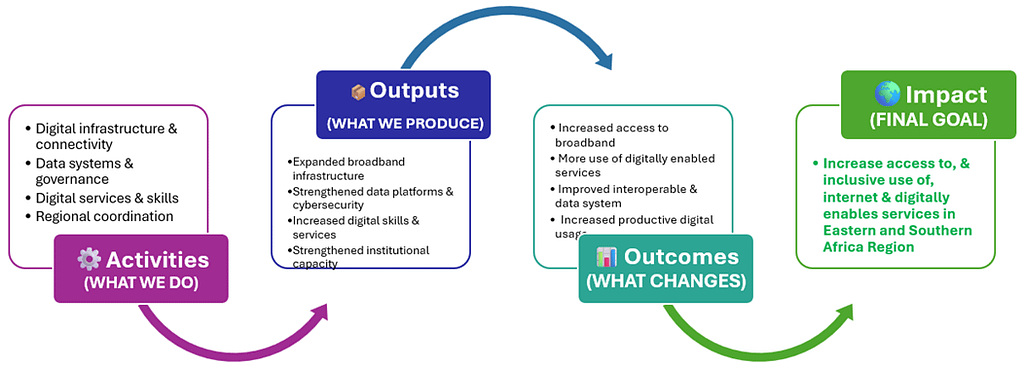
IDEA Results Chain (How Change Happens)
The IDEA programme follows a clear results chain that connects implementation to impact:
Key Programme Indicators (What We Measure)
To track progress at scale, IDEA focuses on a set of core programme indicators:
📶 People using broadband internet → Target: 180 million (50% women)
🪪 People with digitally verifiable ID → Target: 100 million (50% women)
📱 People using digitally enabled services → Target: 100 million (50% women)
🌐 International data traffic (kbit/s per capita) → Increase from 34.5 to 90
These indicators capture the programme’s core priorities:
- Expanding digital access at scale
- Promoting inclusive participation, particularly for women and underserved groups
- Advancing regional digital integration and transformation
Multi-Level Indicator Structure
The IDEA Results Framework is designed to capture results at multiple levels, reflecting the programme’s regional nature and multi-country implementation approach. It integrates national implementation data with regional coordination efforts to provide a comprehensive view of progress toward the programme’s development objectives.
This structure ensures that results are tracked consistently across participating countries while allowing aggregation and analysis at the regional level to support decision-making, reporting, and accountability.
| Levels | What is measures |
| Programme-Level Indicators | Measure progress toward the Program Development Objective (PrDO) by tracking large-scale regional outcomes such as digital access, usage, and connectivity across participating countries. |
| COMESA Regional Indicators | Capture regional coordination, policy, and system-level progress, including development of frameworks, action plans, guidelines, and regional mechanisms that enable digital transformation across countries. |
| National PIU Indicators | Track country-level implementation and outputs, reflecting progress made by participating countries in delivering activities, infrastructure, services, and capacity-building interventions. |
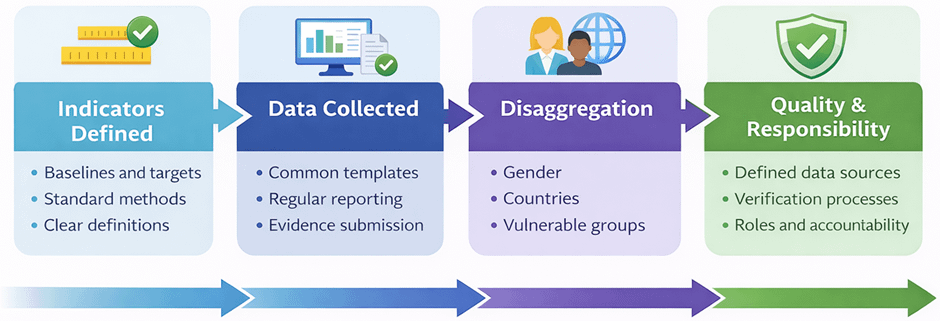
How Results Are Measured
IDEA uses a harmonized measurement approach to ensure that results are tracked consistently across participating countries. This helps generate reliable, comparable, and inclusive data for reporting, learning, and decision-making across the programme.
Data Flow & Reporting Architecture
Performance data flows through a structured system from country to regional level, ensuring consistency, validation, and aggregation of results across all participating countries.
Data is first collected and submitted by national PIUs, including supporting evidence. It is then processed through the regional digital platform, where it undergoes validation and aggregation. The COMESA PCU reviews and analyzes the data to ensure quality and consistency before consolidating regional results. Finally, the data informs oversight, guidance, and decision-making by the PSC and the World Bank.
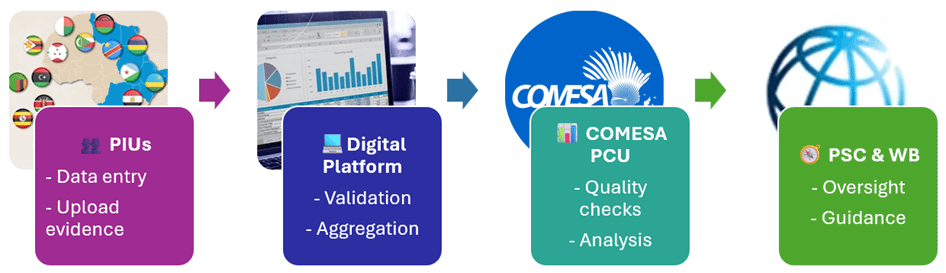
Roles in the Data Flow System
- PIUs → Data collection, entry, and evidence submission
- Digital Platform → Data validation and aggregation
- COMESA PCU → Quality assurance, analysis, and consolidation
- PSC & World Bank → Oversight, guidance, and strategic direction
Driving Results Through Learning
Monitoring and evaluation in the IDEA Programme goes beyond tracking indicators and reporting progress. It is designed to support continuous learning and improvement by generating evidence that informs decision-making at both national and regional levels.
By systematically collecting and analyzing data, the programme enables stakeholders to understand what is working, identify challenges, and adapt implementation approaches to maximize impact across participating countries.
The four elements in the diagram below work together as a continuous learning and improvement cycle within the IDEA Programme.
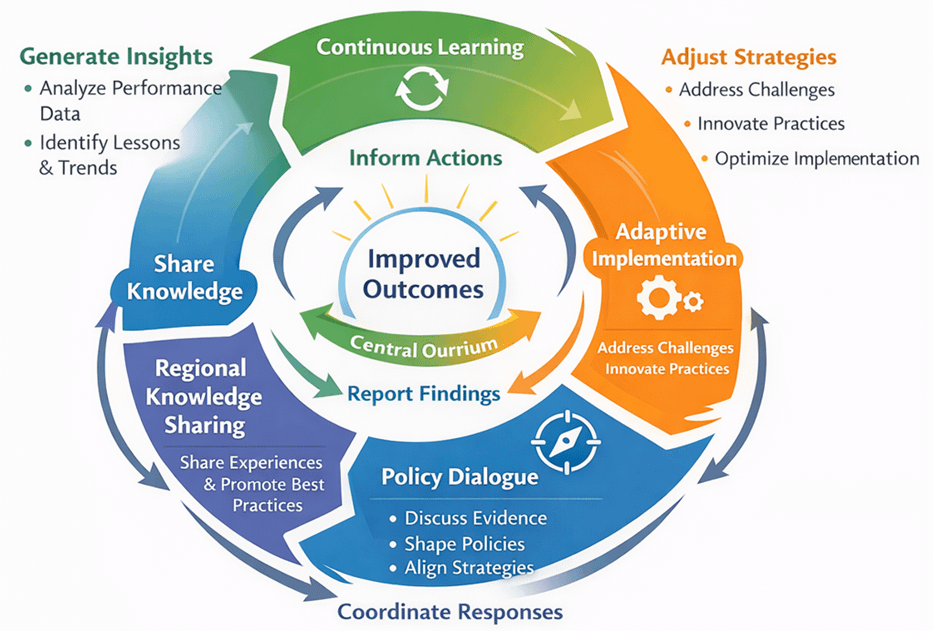
Together, these four elements form an integrated learning and feedback loop within the IDEA Programme. Performance data is continuously analyzed to generate insights, which inform implementation adjustments and strategic decisions. These insights are further used to support policy dialogue and are shared across countries to promote learning and collaboration. This cycle ensures that evidence is not only collected, but actively used to improve programme delivery, strengthen regional coordination, and maximize impact over time.
